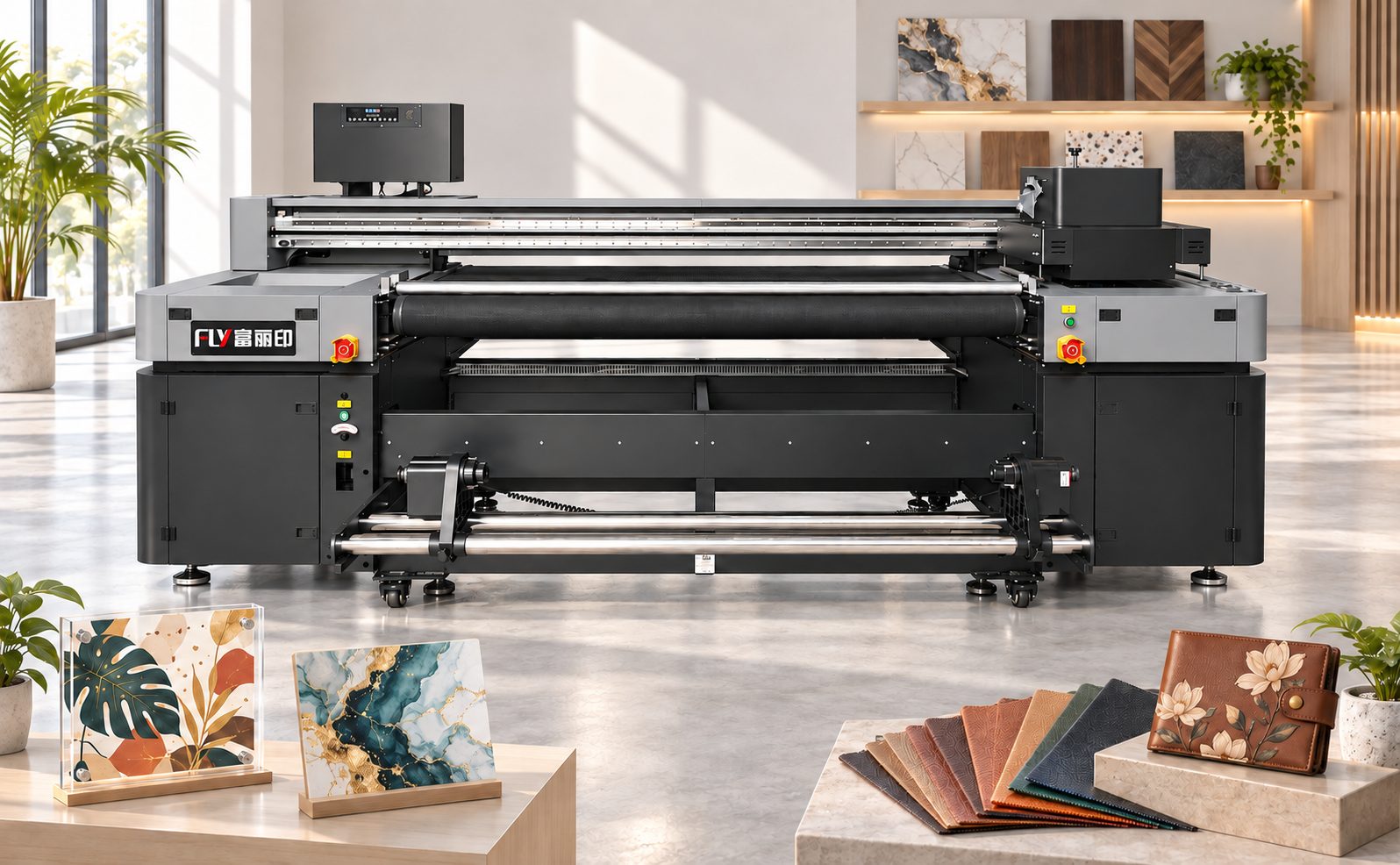
FLY-1804U 4-Head 1.8m UV Belt Printer for Sale
1.8m 4-head UV belt printer for advertising displays, decorative materials & personalized pattern processing. Continuous belt conveying. Factory-direct, MOQ 1.
- Dark & Black Materials · UV Customization

Choose by ink route and throughput; full specs are on each product page.
1.8m 4-head UV belt printer for advertising displays, decorative materials & personalized pattern processing. Continuous belt conveying. Factory-direct, MOQ 1.
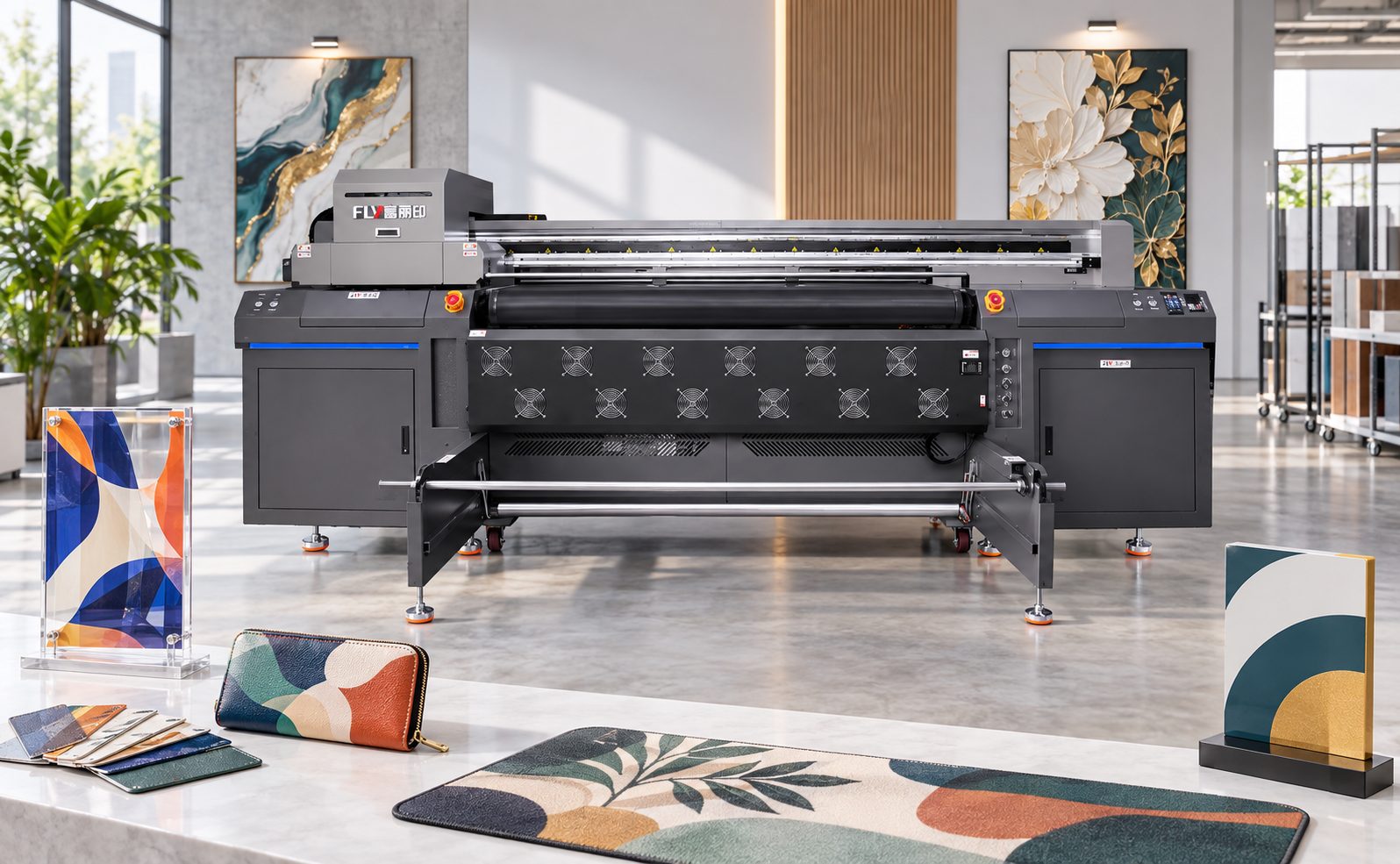
1.8m 8-head UV belt printer for advertising displays, decorative materials & personalized pattern processing. Continuous belt conveying. Factory-direct, MOQ 1.
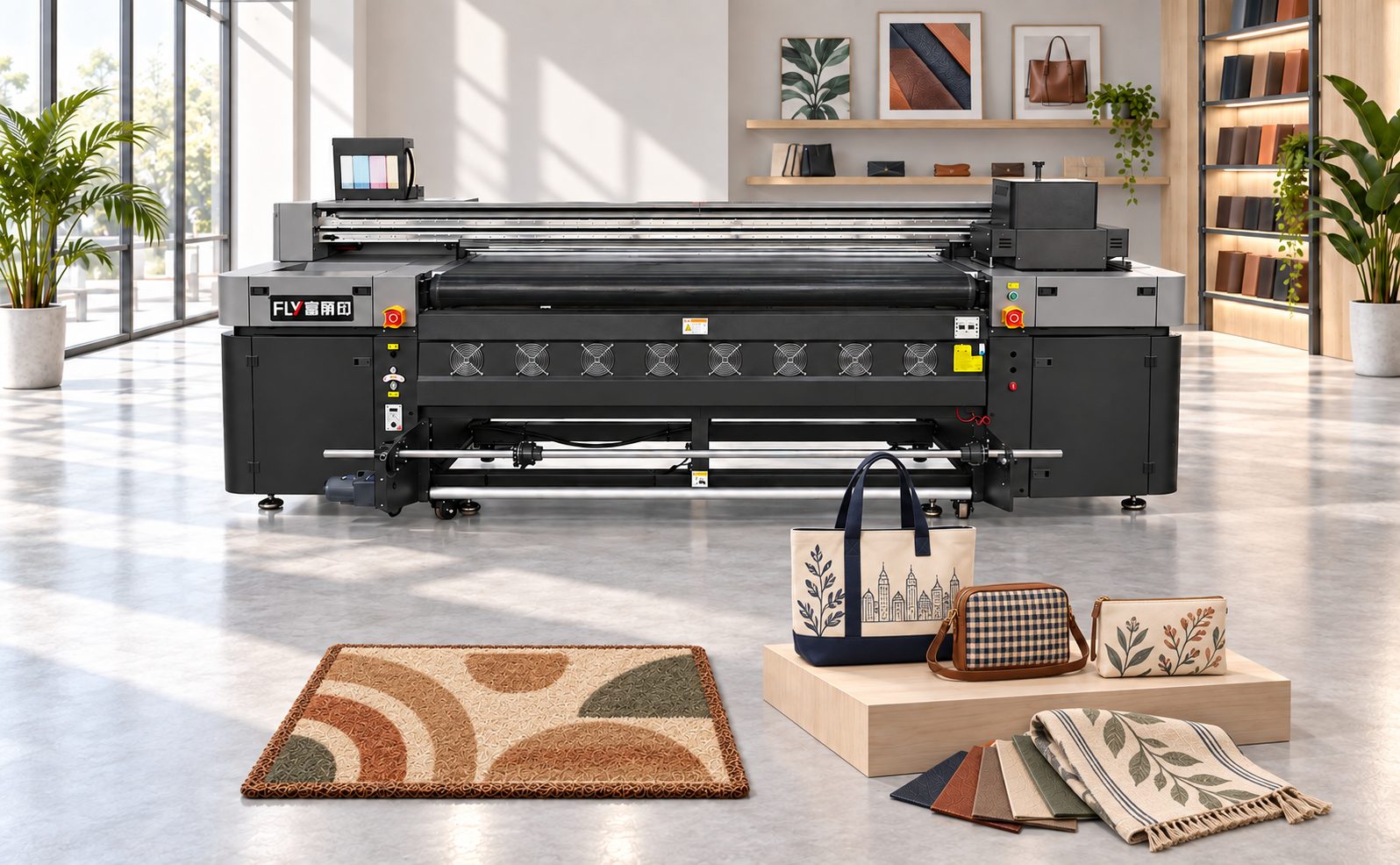
1.8m 4-head eco solvent belt printer for leather, car mats, tablecloths & PVC materials. 66 m²/h with continuous belt conveying. Factory-direct, MOQ 1.
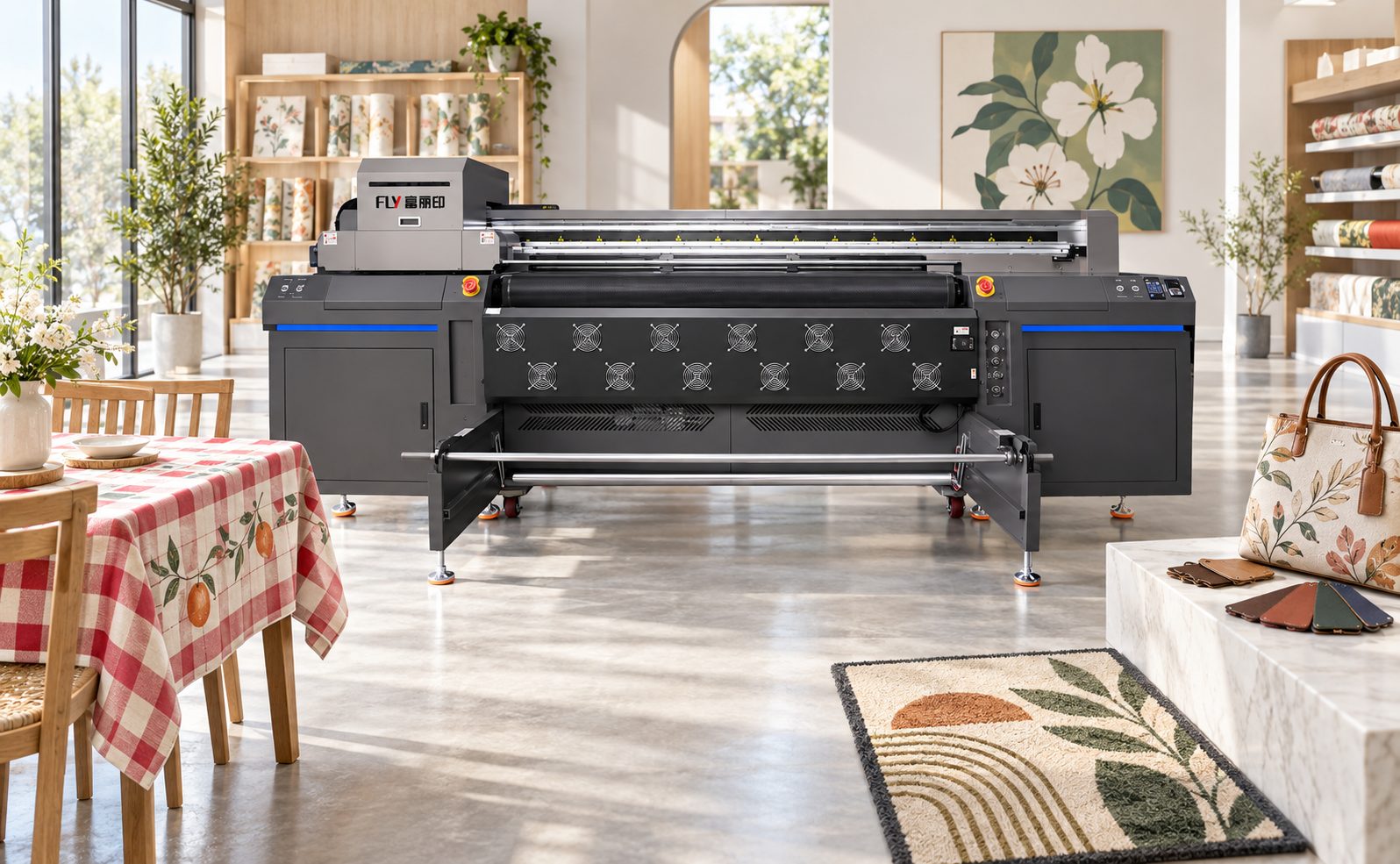
1.8m eight-head eco solvent belt printer for leather, PVC & home decoration materials. Continuous belt conveying for volume production. Factory-direct, MOQ 1.
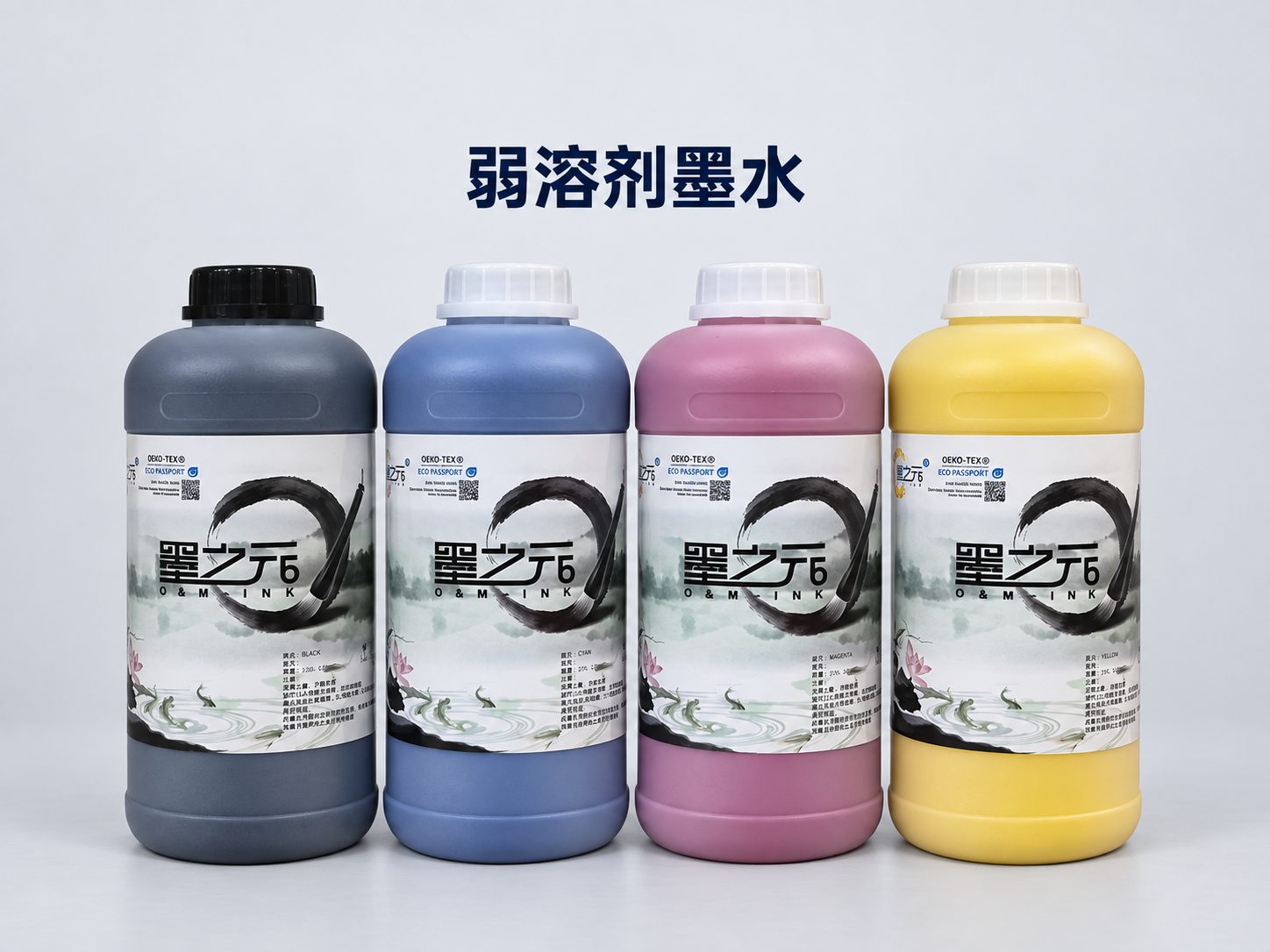
For compatible Eco-Solvent inkjet equipment — posters, light boxes, car stickers and commercial display graphics; ink models are matched to the print head and media.
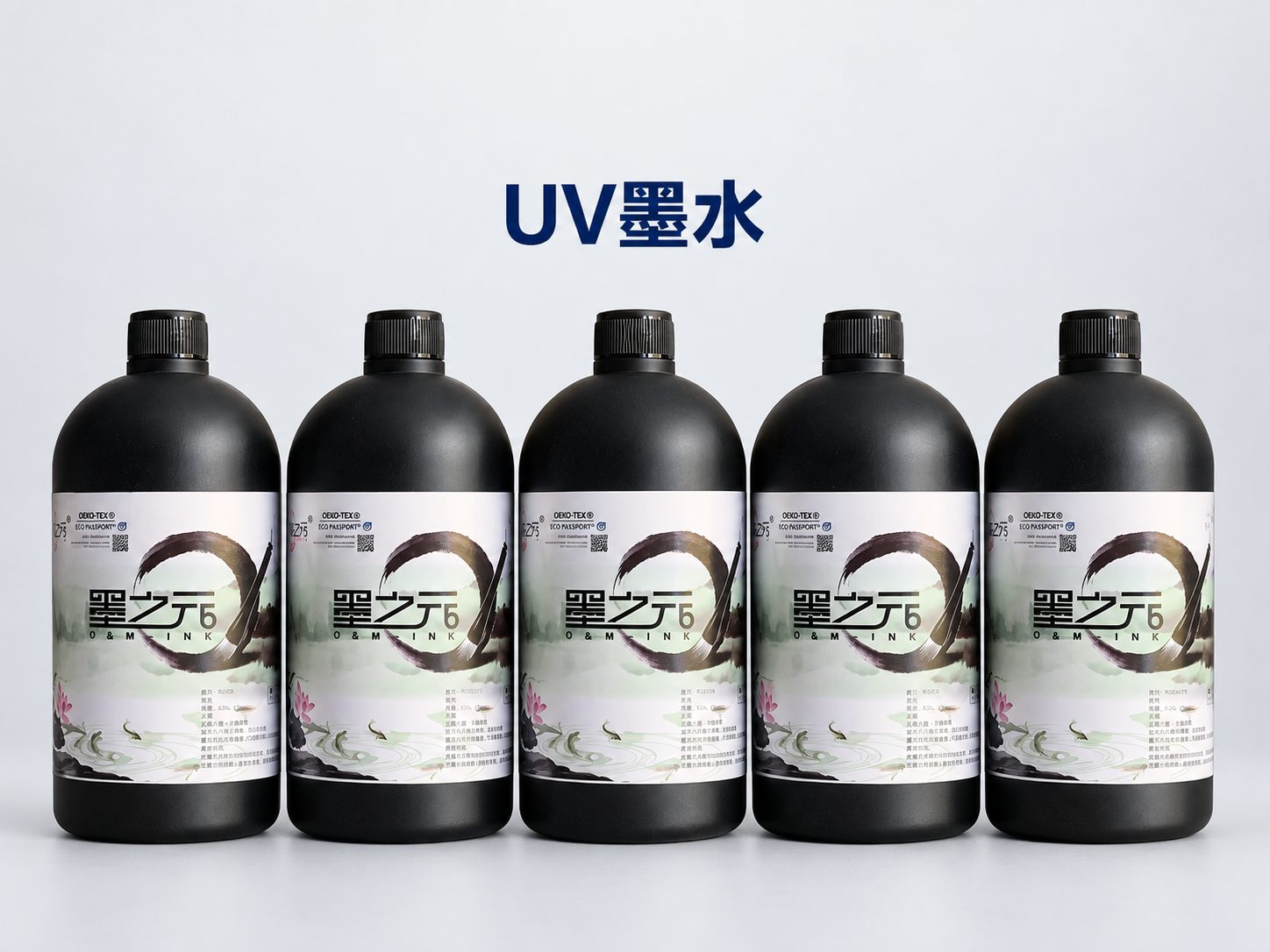
For compatible UV inkjet equipment — advertising signage, creative gifts and decorative pattern printing; ink models are matched to the print head, curing system and application material.
Ink route, width and throughput, feeding stability and pre-treatment decide whether it runs steady in production.
For leather and tablecloth printing, choose an eco-solvent belt machine first: ink penetrates the material, hand feel stays soft, colours stay vivid and running cost is lower. UV is the second choice, for jobs needing a harder, more abrasion-resistant surface. Printing on black or dark material? It must be UV — only multi-layer white UV ink builds enough opacity; eco-solvent colours look muddy and grey on a dark base.
180 cm is the mainstream width for home textiles and lightbox fabric. Four heads suit many styles in small batches; eight heads suit continuous production.
Look at belt tracking, tension and vacuum hold-down — how steadily soft and elastic material feeds directly determines registration accuracy and scrap rate.
Leather needs surface cleaning; eco-solvent needs a drying and evaporation tunnel, UV needs pre-treatment for adhesion and white opacity. Always sample on the real material before production.
Steady feeding and accurate registration win the order.
Direct printing on bags, shoe uppers, leather goods and panels. Standard leather runs best on eco-solvent: soft hand, lower cost.
Wide-format printing for tablecloths, placemats, curtains and cushion fabric — eco-solvent penetrates well, washes well and stays soft.
Black leather, dark canvas, dark PVC — UV belt with white ink underbase for solid, opaque colour.
Backlit soft film, advertising banners, display graphics.
Door mats, floor mats and made-to-order personalised jobs.
Practical guides on selection, process and troubleshooting.
From ink fixation mechanisms and white-ink differences to fold resistance and cost — how to actually choose between the UV belt and eco-solvent belt routes.
Read Full GuideRead these before you ask for a quote — it speeds everything up.
The eco-solvent belt machine, FLY-1804E POR / FLY-1808E. Eco-solvent ink soaks into the leather fibre, so the finish stays soft, resists cracking when folded, and costs less to run. Move to the UV belt (FLY-1804U / FLY-1808U) only when you need a harder, more abrasion-resistant surface.
Again the eco-solvent belt, in 180 cm (FLY-1804E POR / FLY-1808E). Tablecloths are usually polyester or other synthetics — wide, soft to the touch and wash-fast, which is exactly where eco-solvent penetration wins. Upgrade to UV only if you need a thick ink layer or heavy abrasion resistance.
A UV belt machine. UV white ink can be stacked in multiple layers, so it delivers solid, bright colour on black leather, dark canvas or dark PVC. Eco-solvent white has limited opacity — colours on a dark base turn grey and muddy.
One line: for everyday leather and tablecloth printing where you want soft hand feel and low running cost, choose eco-solvent; for black or dark material, a thick ink layer or heavy abrasion resistance, choose UV. Still unsure? Send us your material and we will sample both side by side.
Yes. An eco-solvent belt machine prints straight onto leather and cures through the drying tunnel; pre-treatment improves adhesion and colour fastness. Very soft or highly elastic leathers should be sampled first.
Belt machines have tracking and tension control; soft material must be flattened and secured before loading. Our installation includes feeding calibration and registration setup.
Tell us the material, width and daily output — we return a sample result and a configured quote within 48 hours.